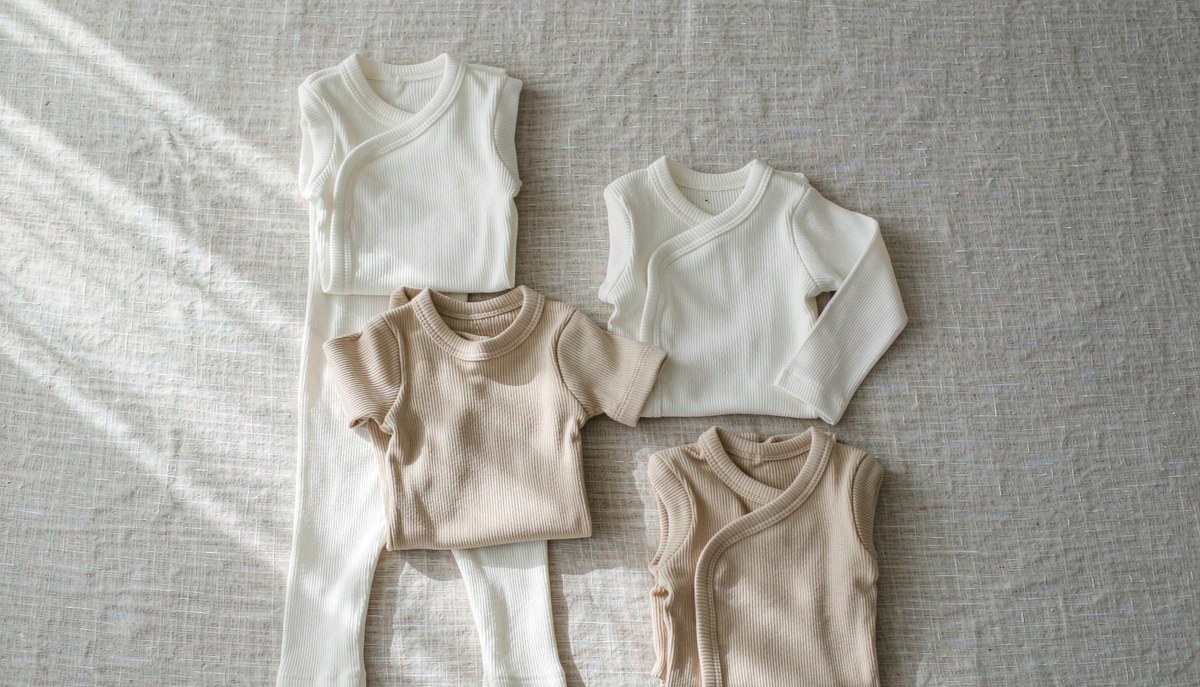
Illustrative image: folded cotton infant bodysuits and a romper. Shows the garment type, not our production.
Fifteen years on one age group. The plant was built for infant knitwear. It is not a general cut-and-sew shop that takes baby orders on the side between men's shirts.
Infant styles only, across three sewing workshops, sewn at infant tolerances rather than adult ones. Figure is the plant's own published capacity.
Every size in the run is graded and sewn as its own pattern block. Nothing is one block scaled up until it stops fitting at the crotch.
Jigs and sewing templates are made on site — a 20,000-piece repeat sews to the same stitch line as the first sample, not to whoever is on the machine that morning.
Knit cotton and cotton/elastane, cut and sew. If your style is on this list, the answer is a quotation, not a maybe.
| Style family | What we run | What to send |
|---|---|---|
| Bodysuits & rompers | Envelope or lap shoulder, snap crotch, short or long sleeve, footed and footless, kimono wrap | Tech pack or a sealed sample, size range |
| Two-piece sets | Top and pant, top and short, top and legging; rib cuffs, elastic or drawcord waist (cord-free where the market requires) | Tech pack, fabric weight, trim list |
| Sleepwear & lounge | Pyjama sets, sleepsuit, bodysuit-and-pant sets for nightwear programmes | Flame-resistance rule for the destination market |
| Small accessories | Bibs, hats, mitts, booties — run inside the same lot as the garment | Artwork, trim spec |
| Fabric | Single jersey, 1×1 rib, interlock, piqué, ribana; 100% cotton and cotton/elastane; solid, yarn-dyed stripe, melange | Composition, weight in g/m², shrinkage tolerance |
| Decoration | All-over print, placement print, screen and digital, embroidery and appliqué (embroidery is in-house) | Artwork files, colour references, placement guide |
Six things that decide whether a babywear shipment clears inspection. They are also the six things a general factory gets wrong.
Snaps, buttons, appliqué and bows are pull-tested to the force your market's standard sets. The report travels with the goods, not in a drawer.
Hood and neck cords, waist drawstrings and toggles are checked against the cord-safety rule for the destination — EN 14682 for the EU, CPSIA for the US — before the pattern is released.
Formaldehyde, pH, azo dyes and heavy metals are tested to the class your market applies to infant wear, where the limits are tighter than for adult clothing.
Colour fastness to saliva, perspiration, washing and rubbing. A print that looks right on the hanger and bleeds at 40°C is a recall, not a complaint.
Knitted cotton moves. We control it at the finishing stage and state the tolerance we hold on the quotation, measured the way your market measures it.
Seven or eight sizes in one order is normal in infant wear. Each size is a separate pattern block with its own crotch depth and armhole, not a percentage scale.
Pattern and sewing template made for the style, then a sealed sample.
Fabric relaxed and checked before the blade; shade matched across the lay.
Overlock, flatlock or coverstitch as the construction needs.
Thread, needle and metal detection, then pressing.
100% piece inspection on infant orders, plus measurement audit.
Polybag, hanger or flat pack to your carton mark and ratio.
Send these seven and the first reply can carry a real number instead of a range.
0–3M to 3T, and how many sizes. This sets the pattern blocks and the grading cost.
Composition, knit structure and g/m². If you already buy the fabric, say so — we can sew on customer-supplied material.
Overlock or flatlock, snap or button crotch, binding or banded neck.
Snaps, labels, printed neck tape, artwork files, embroidery placement.
Where it sells decides which safety standard is tested and which cord rule applies.
Polybag or hanger, size ratio per carton, carton mark, barcode or hangtag.
Minimum is set by colour and size break together, not by units alone.
One physical garment removes a week of email. Send it and we work from the actual stitch.
Workable on an order basis, with one caveat to settle early: an organic standard normally covers the cotton, not the elastane. Tell us which standard your buyer requires and whose name has to appear on the transaction certificate, and we confirm in writing what we can provide for that run. We do not publish a certificate list — the answer is set by the order, not by a logo on a page.
Not on this site. Vendor approval needs the legal entity, the address and the audit reports, so a buyer who is placing an order gets all of it — with the plant's own name on the documents, under NDA. What we will not do is put a facility's details on a public page for anyone to lift.
Set by colour and size break together, so there is no single number that is true for every style. An infant order in one colour across six sizes is a different quantity from eight colours across eight sizes. Send the size and colour count and the figure comes back in writing the same day.
Quoted per style, because style count, fabric and decoration move it more than quantity does. Sampling first, then a bulk date confirmed in writing before we start. We do not publish a fixed lead time that would not hold for your order.
Yes. Buyers and their third-party inspectors are welcome, and infant programmes are audited more often than adult ones for obvious reasons. Social-compliance, quality-system and traceability audits have been run here by export customers; reports can be released to buyers who need them for vendor approval.
Our own mill weaves and finishes woven fabric; infant knitwear is knitted and dyed through our vetted domestic knit network, then cut and sewn on the infant line. One accountable team handles both, so a fabric substitution does not become your problem to discover at inspection.
Seven points above, or a tech pack, or one sample in an envelope. A named merchandiser owns the programme from first sample to loaded container.
Hanger card plus A4 samples, up to five knit qualities, courier within three days, no charge. Tell us the age group and we will pick the weights that actually suit it.